
Best Decking Material: Wood, Composite, or PVC
Choosing the right decking material is one of the most important decisions you’ll make when building or renovating a deck or porch. Our region’s humid summers, freeze–thaw winters, and intense UV exposure can quickly wear down outdoor structures. Wood, composite, and PVC are the most popular options, and each offers distinct tradeoffs to consider depending on your budget, lifestyle, environment, and time horizon.
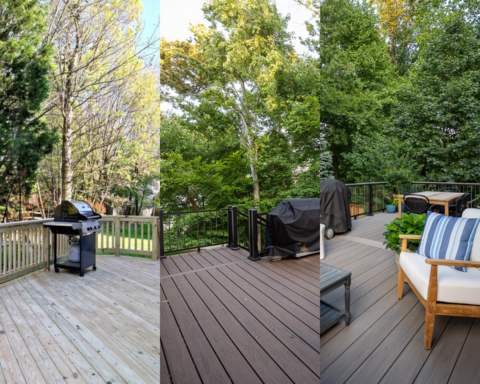
Wood
For decades, pressure-treated pine was the go-to decking material thanks to its natural appearance and timeless feel, but NoVA’s climate can take a toll. Today’s wood is not like wood from 20 years ago, due to rapid harvesting cycles and new pressure-treatment formulas. Direct sun exposure is the greatest enemy of wood, and shaded settings often result in mold and mildew. Wood also requires pressure-washing and sealing every year or two to maintain appearance and durability. Aside from the hassles of frequent maintenance, the upkeep expenses quickly erase any cost savings compared to composite or PVC.
Composite
Composite decking is the most popular choice because it blends recycled plastics with wood fibers, providing a strong, low-maintenance solution for NoVA’s fluctuating weather. It handles sun, humidity, rain, and winter weather with minimal expansion or contraction. It requires no staining or sealing, and it only needs seasonal cleaning. Composite has a long lifecycle that is warrantied for 25 to 30 years because it is resistant to mold, mildew, rot, fading, cracking, and insects. Our most frequently used composite material is TimberTech Edge Prime Plus because the pricing compared to wood is minimal, while the aesthetic appeal is maximal. Composite delivers a consistent appearance and provides a higher return on investment than wood. Downsides include a higher upfront cost, a less natural-looking appearance, and more heat absorption/radiation in direct sun exposure (lighter colors help).
PVC
PVC decking has become increasingly popular because it is made of 100% synthetic materials with no wood fibers, which makes it exceptionally resistant to moisture and weather-related damage. In Northern Virginia’s climate, PVC is the highest-performing option long-term with a 50-year warranty. Our most frequently used PVC material is TimberTech Vintage. Compared to composite, it is 30% less hot in direct sunlight and it is 30% lighter-weight. The lighter weight means it performs better over the long-term because it doesn’t put as much gravitational force on the framing. PVC also provides the best traction for wet feet which is important if you have a swimming pool. Downsides include the highest upfront cost and more flex than composite (we narrow the joist span to counterbalance this).
Summary Chart
Here is a handy comparison chart between the three materials:
| Feature | Wood | Composite | PVC |
| Initial Cost | Low | Medium | High |
| Maintenance | High | Low | Very low |
| Moisture Resistance | Low | High | Excellent |
| Freeze–Thaw | Fair | Excellent | Excellent |
| Heat Resistance | Good | Moderate | Very good |
| Lifespan in NoVA | 15–20 years | 25–30 years | 50 years |
| Appearance | Most Natural | Less Natural | More Natural |
Which Material is Best for You?
Choose wood if you want the most natural aesthetic, you’re on a tighter budget, or you don’t mind regular maintenance. Choose composite if you want a durable, low-maintenance option, and you’re looking for a balance between cost and long-term performance. Choose PVC if you want the longest-lasting material, you have heavy sun exposure, or you want the lowest maintenance possible.
Summary
Northern Virginia’s climate is tough on decks, but today’s materials offer great solutions depending on your priorities. Choosing the right material comes down to your budget, style, environment, time horizon, and how much maintenance you’re willing to take on. If you Contact Us, we will explain your options and tradeoffs in more detail to help ensure you make the optimal choice.